6 Aug 2026 5 min read
5 Signs It's Time to Repot Your Plant (And What to Repot It Into)
Most plant deaths blamed on “bad luck” or “wrong watering” actually trace back to one overlooked cause: the plant simply outgrew its pot months ago. Repotting isn’t a chore to schedule once a year on the calendar — it’s something your plant tells you it needs, if you know what to look for.
Here are the five clearest signs, and what to put your plant into once you’ve decided to move it.
1. Roots Are Circling or Poking Out of the Drainage Holes
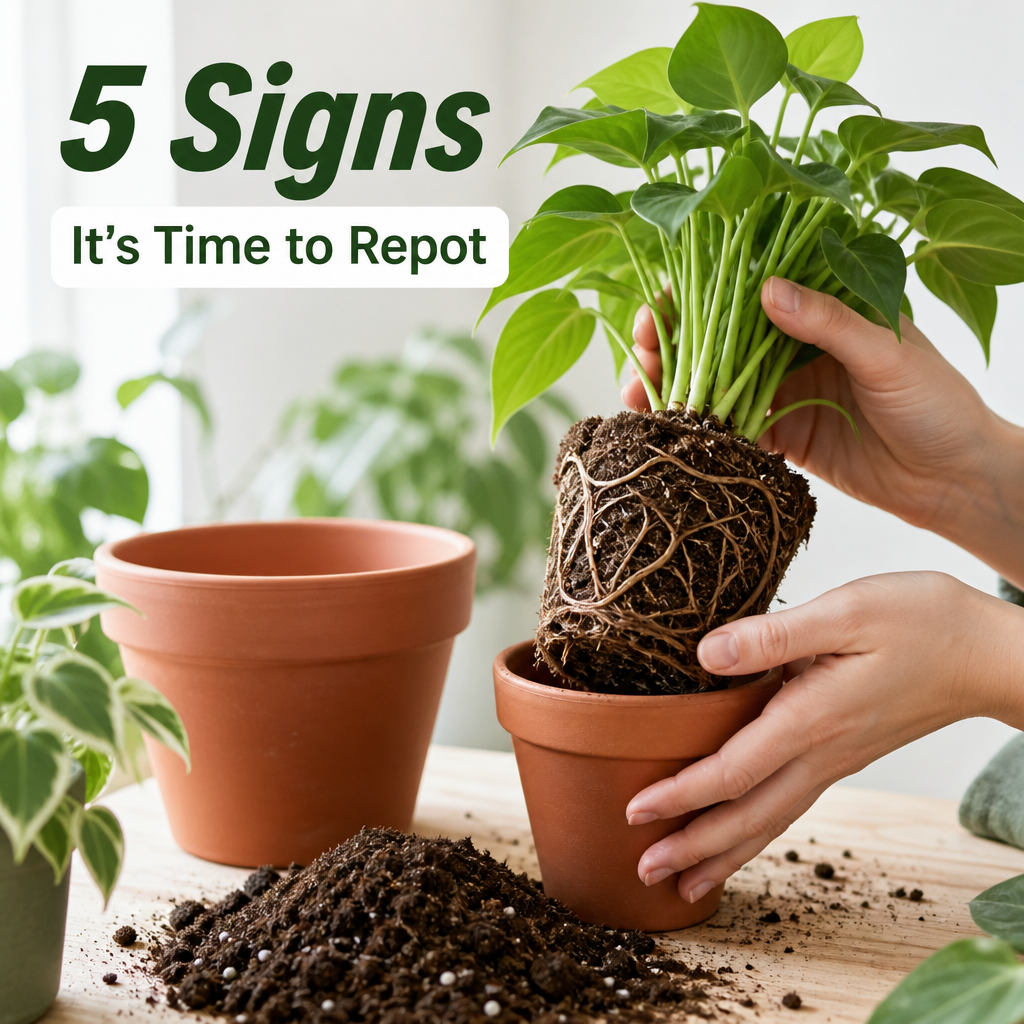
This is the most obvious sign, and the one most people miss because it happens out of sight. Gently slide the plant out of its pot — if you see a dense, tangled mass of roots circling the bottom (called being “root-bound”), or roots visibly emerging from the drainage holes, the plant has run out of room to grow.
What it means: the roots can no longer access fresh soil, water, or nutrients, so the plant’s growth stalls even if everything above the soil looks fine for a while.
2. Water Runs Straight Through Without Being Absorbed
If you water your plant and it comes out of the drainage holes almost immediately, with little of it seeming to soak into the soil, that’s a sign the pot is more root than soil at this point. There’s simply no soil volume left to hold moisture.
What it means: your watering schedule stops working the way it used to, even though you haven’t changed anything — because the soil-to-root ratio has changed, not your routine.
3. Growth Has Slowed or Stopped Despite Good Care
A plant that used to push out new leaves regularly but has gone quiet for a couple of months — despite consistent light, water, and feeding — is often pot-bound. Once roots have nowhere left to expand, the plant redirects its energy into simply maintaining itself rather than growing.
What it means: this is different from seasonal dormancy. If it’s the plant’s active growing season and growth has still stalled, check the roots before assuming it’s a feeding or light problem.
4. The Plant Feels Top-Heavy or Tips Over Easily
When a plant’s foliage has outgrown what its pot can anchor, it starts to feel unstable — tipping over in a light breeze or wobbling when you touch it. This is a proportion problem: the pot hasn’t grown, but the plant has.
What it means: beyond the growth issue, an unstable pot is also a practical hazard for larger plants, especially with pets or kids around.
5. You Notice a Persistent Salt Crust or Smell From the Soil
A white, crusty buildup on the soil surface or pot rim is mineral and fertilizer salt accumulation — a sign the soil has been reused for a long time without being refreshed. Combined with any of the signs above, it’s a strong signal that the growing medium itself has broken down and compacted, not just that the pot is too small.
What it means: old, compacted soil holds less air and drains poorly, which suffocates roots even in a technically large-enough pot. Sometimes the fix isn’t a bigger pot — it’s fresher soil in the same one.
What to Repot Into
Once you’ve spotted one or more of these signs, the next decision matters just as much as the timing: what you repot into.
Going Up a Pot Size?
Choose a pot roughly 2 inches larger in diameter than the current one — too big a jump leaves excess soil that stays wet too long and invites root rot.
Choosing Your Soil
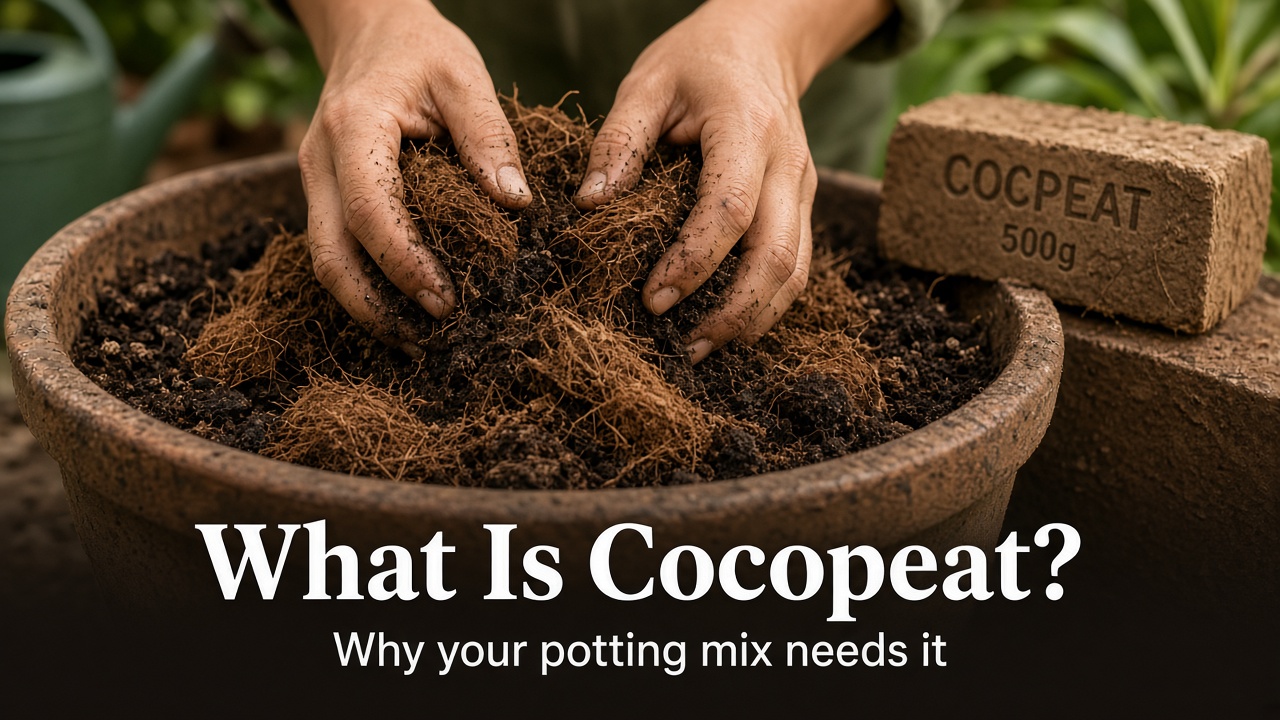
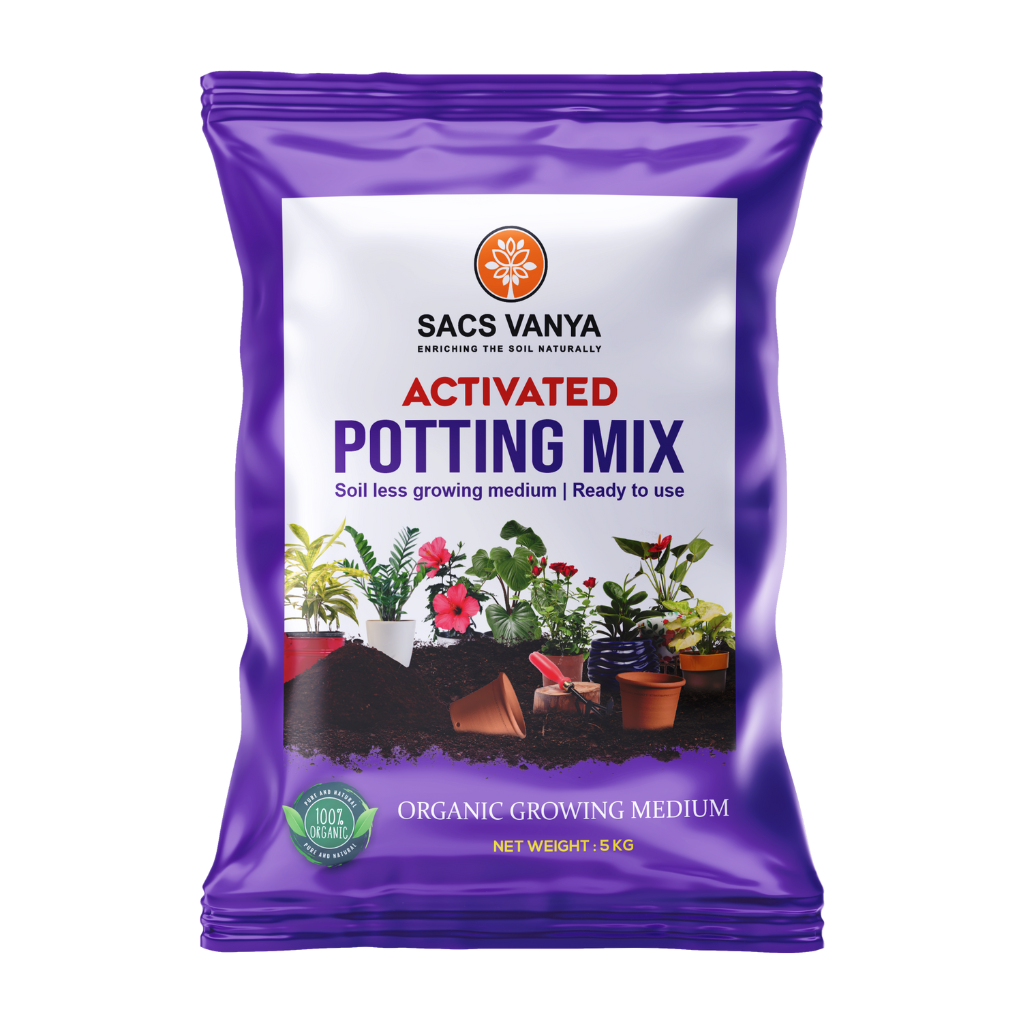
This is where most people either spend an afternoon measuring out cocopeat, perlite, vermicompost, and garden soil by hand, or reach for a pre-mixed, ready-to-use blend that’s already balanced for drainage and nutrition. If you’d rather skip the measuring, a ready-mixed potting soil designed for container gardening takes that step out entirely — pour, plant, water.
For a deeper look at mix ingredients and DIY ratios, see our guide to the best potting mix for plants.
Feed After Repotting, Not Immediately
Wait one to two weeks after repotting before adding vermicompost or fertilizer. Freshly disturbed roots need time to settle before they can take up nutrients efficiently.
Quick Repotting Checklist
- Water the plant a day before repotting — it makes it easier to slide out and reduces transplant shock
- Gently loosen circled roots before placing into the new pot
- Fill with fresh, well-draining potting mix, not reused old soil
- Water thoroughly right after repotting, then hold off on fertilizer for 1–2 weeks
- Keep the plant out of direct harsh sun for a few days while it adjusts
FAQ
How often should I repot houseplants?
Most houseplants need repotting every 12–18 months, though fast growers may need it yearly and slow growers like succulents can go 2–3 years.
Can I repot a plant that isn’t root-bound yet?
Yes — refreshing the soil every couple of years even without visible root-binding helps prevent compaction and nutrient depletion.
Is it bad to repot a plant while it’s flowering?
It’s not ideal. Where possible, wait until flowering finishes, or repot carefully without disturbing the root ball too much.