12 Sept 2026 7 min read
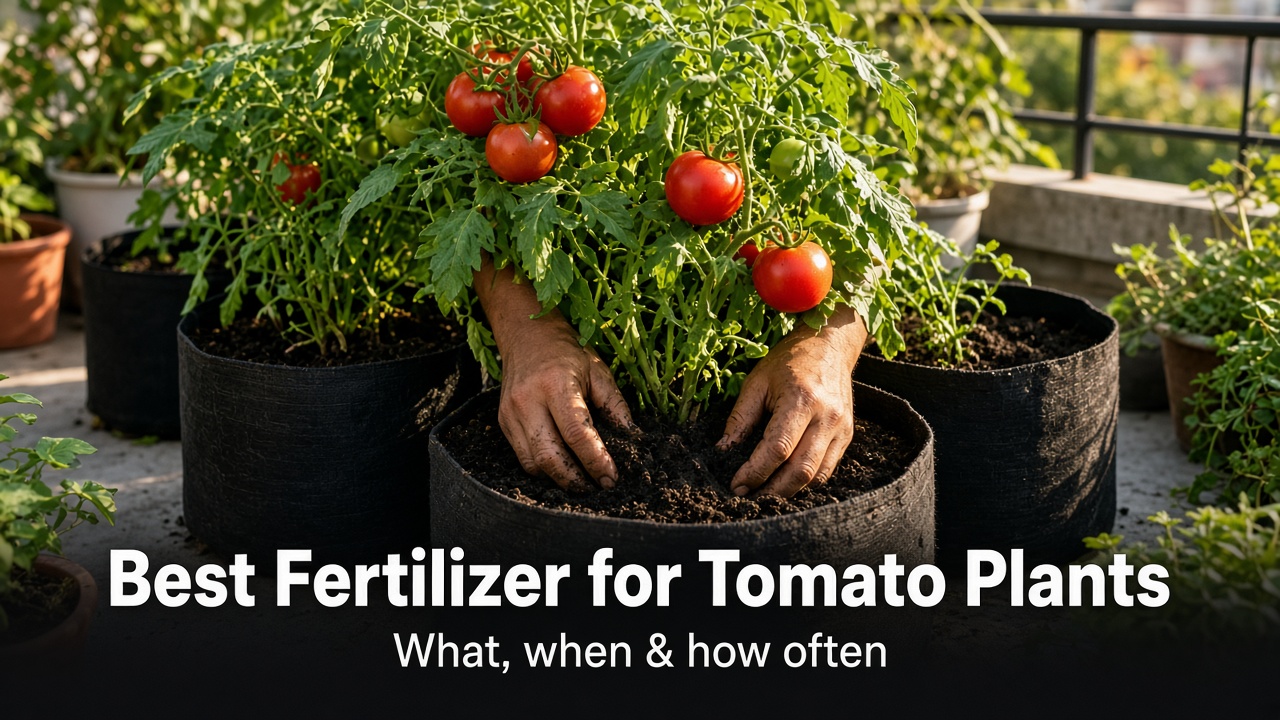
Best Fertilizer for Tomato Plants: What, When & How Often to Feed
Quick Answer
- Best fertilizer for tomato plants: A vermicompost base at planting, followed by a phosphorus-potassium boost (bone meal or potash) once flowering begins.
- When to fertilize tomato plants: At planting, again 3–4 weeks into growth, and once more when the first flowers appear.
- How often to fertilize tomato plants: Every 3–4 weeks during the growing season, shifting focus from nitrogen early on to potassium during fruiting.
Why Tomato Plants Need a Specific Feeding Approach
Tomatoes are heavy feeders with needs that shift as they grow. Early on, they need enough nitrogen to build strong stems and foliage. But once flowering starts, too much nitrogen becomes a problem — it pushes the plant toward more leaves at the expense of fruit. This is one of the most common mistakes home gardeners make with tomato plant fertilizer: continuing a nitrogen-heavy feed straight through the fruiting stage, then wondering why the plant looks lush but produces little.
Best Fertilizers for Tomato Plants
1. Vermicompost
A balanced, slow-release organic fertilizer that supports steady growth throughout the tomato plant’s life cycle. It’s an easy, low-risk base feed that’s hard to over-apply.
Best for: the foundational feed at planting and through the vegetative stage.
2. Vermiwash
A fast-acting liquid feed absorbed through both roots and leaves. Useful as a booster during flowering and fruit-set, when tomato plants often need a quick nutrient lift.
Best for: a weekly or bi-weekly foliar boost during flowering and fruiting.
3. Bone Meal
A slow-release phosphorus source that supports strong root development and flower formation — important for a good fruit set.
Best for: mixing into soil at planting, or just before flowering begins.
4. Potash (Potassium-rich amendments)
Potassium is critical during fruiting — it directly affects fruit size, firmness, and overall yield.
Best for: application once the first flowers appear and through fruit development.
5. Compost
General organic compost improves soil structure and moisture retention, supporting the plant’s overall root health across the season.
Best for: working into soil before planting and as a periodic top-dress mulch.
What Is a Good Natural Fertilizer for Tomato Plants?
For gardeners specifically looking for a natural fertilizer for tomato plants, a combination of vermicompost (for steady nutrition) and vermiwash (for a fast-acting boost) covers most of what tomatoes need without synthetic inputs. Adding bone meal at planting and potash during fruiting rounds out the phosphorus and potassium tomatoes need most during their reproductive stages — all without a single chemical fertilizer.
Nitrogen Fertilizer for Tomato Plants: Getting the Balance Right
Nitrogen is essential early on — it builds the stems and leaves the plant needs before it can support fruit. But nitrogen fertilizer for tomato plants should be scaled back once flowering starts. Too much nitrogen during flowering and fruiting is one of the most common reasons for a tomato plant that looks green and vigorous but sets very little fruit.
A simple nitrogen guideline:
- Early growth (before flowering): Moderate nitrogen feeding supports healthy stem and leaf development.
- Flowering onward: Reduce nitrogen and shift focus to phosphorus and potassium instead.
Organic sources like vermicompost naturally release nitrogen more gradually than synthetic fertilizers, which makes over-application less likely — but it’s still worth easing off once flowers appear.
How to Fertilize Tomato Plants
- At planting — Mix vermicompost and a small amount of bone meal into the planting hole or potting soil.
- 3–4 weeks into growth — Apply a fresh round of vermicompost around the base to sustain steady vegetative growth.
- At first flowering — Introduce a potash-rich feed, and begin a lighter, more frequent vermiwash schedule.
- Through fruiting — Continue potassium-focused feeding, watering thoroughly after each application to help nutrients reach the root zone.
Always water the soil before fertilizing rather than applying to dry soil, which helps prevent root stress.
When to Fertilize Tomato Plants
- At planting — establish the nutrient base
- 3–4 weeks after planting — reinforce vegetative growth
- At first flower — shift toward phosphorus and potassium
- Throughout fruiting — maintain potassium levels for consistent fruit development
How Often to Fertilize Tomato Plants
For most home gardeners, an every 3–4 weeks feeding schedule works well for the base (vermicompost), with a lighter weekly to bi-weekly vermiwash application layered on top during flowering and fruiting for faster-acting support.
| Growth Stage | Fertilizer Focus | Frequency |
|---|---|---|
| Planting | Vermicompost + bone meal | Once, at planting |
| Vegetative growth | Vermicompost | Every 3–4 weeks |
| Flowering | Potash + vermiwash | Vermiwash weekly; potash at flower onset |
| Fruiting | Potash + vermiwash | Continue every 3–4 weeks (base) + weekly vermiwash |
Try Our Free Gardening Calculators
Not sure how much vermicompost or potting mix your tomato plants actually need?
- Vermicompost Dosage Calculator — enter plant type or area for how much to use and how often.
- Potting Mix Pack Size Calculator — enter pot size and count for the right pack size to order.
Signs Your Tomato Plant’s Feeding Needs Adjusting
- Lots of leaves, little fruit → too much nitrogen during flowering; shift to potassium
- Yellowing lower leaves → possible nitrogen deficiency during early growth
- Small or few fruits → likely a potassium shortfall during fruiting
- Blossom drop → often linked to inconsistent watering alongside nutrient stress
FAQs
How often should I fertilize my tomato plants?
Every 3–4 weeks with a vermicompost base, plus a weekly or bi-weekly vermiwash application once flowering begins.
When should I fertilize tomato plants?
At planting, again 3–4 weeks into growth, and once more when the first flowers appear — shifting from a nitrogen focus early on to potassium during flowering and fruiting.
How do I fertilize tomato plants correctly?
Mix vermicompost and bone meal in at planting, continue vermicompost every 3–4 weeks through vegetative growth, then add a potash-rich feed and weekly vermiwash once flowering starts.
What is a good natural fertilizer for tomato plants?
A combination of vermicompost, vermiwash, bone meal, and potash covers tomato plants’ full nutritional needs organically, from early growth through fruiting.
Is too much nitrogen bad for tomato plants?
Yes — excess nitrogen, especially during flowering, encourages leafy growth at the expense of fruit production. Nitrogen should be reduced once flowering begins, with potassium taking priority instead.