
3 Sept 2026 4 min read
Neem Cake Powder for Plants: Uses, Benefits & How to Apply
Neem cake powder is one of the most trusted organic inputs for home gardens. It’s made from crushed neem seeds and works as both a soil enricher and a natural pest repellent. Here’s everything you need to know before you start using it.
What Is Neem Cake Powder?
Neem cake powder (also called neem powder or neem khali) is the solid residue left after oil is pressed out of neem seeds. It still holds natural compounds like azadirachtin, which give it strong pest-repelling and soil-enriching properties.
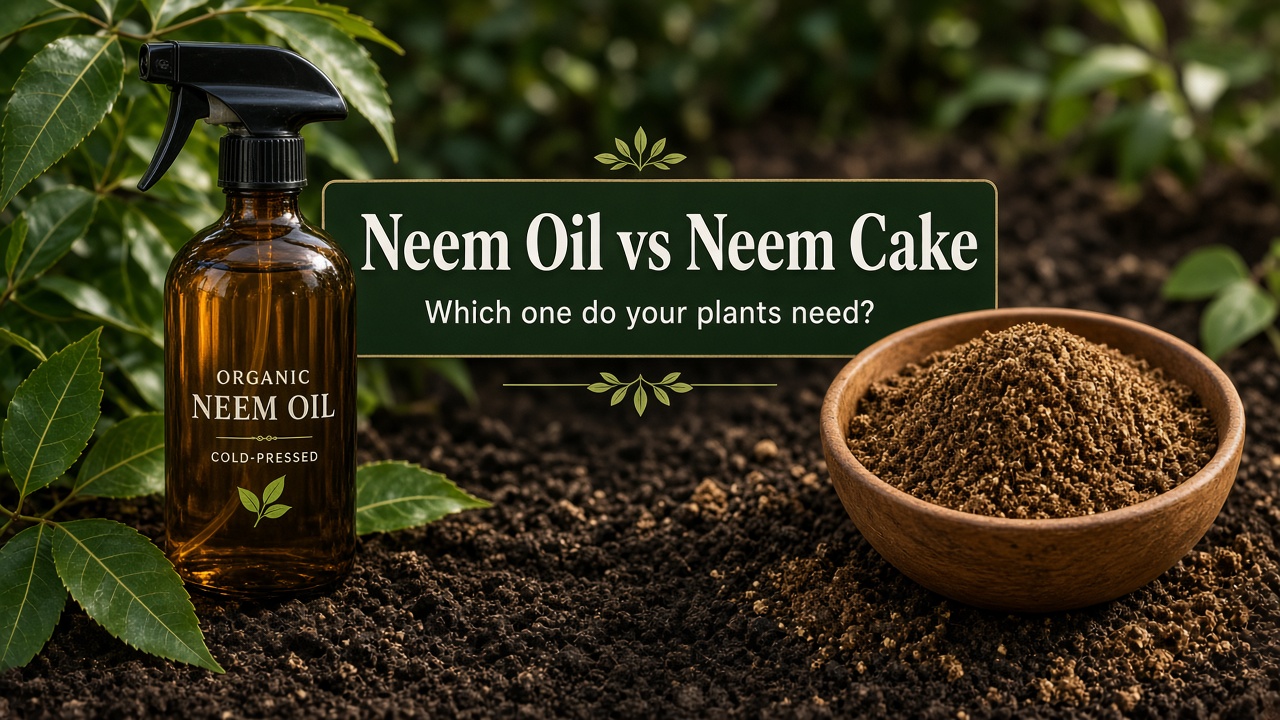
Unlike neem oil, which is a liquid spray, neem cake powder is applied directly to the soil. Both come from the same source, but they work in different ways — neem oil acts faster on visible pests, while neem powder works slowly over weeks, improving soil health as it breaks down.
Benefits of Neem Cake Powder
- Repels soil pests — Keeps common soil-dwelling pests like grubs, nematodes, and termites away from plant roots.
- Improves soil health — Boosts microbial activity in the soil, which helps roots absorb nutrients better.
- Slow-release nutrition — Breaks down gradually, feeding plants over several weeks instead of all at once.
- Chemical-free — Safe for edible plants, houseplants, and flowering plants alike.
- Reduces fungal issues — Helps suppress some soil-borne fungal problems when used regularly.
How to Apply Neem Cake Powder
- Mix into soil before planting — Add about 50–100 grams per pot (adjust for pot size) and mix it into the topsoil.
- Top-dress established plants — Sprinkle a thin layer around the base of the plant, away from the stem, and water it in.
- Reapply every 30–45 days — Since it breaks down slowly, a monthly top-up keeps the benefits going.
- Water after application — This helps release the nutrients and pest-repelling compounds into the soil.
Tip: Avoid placing neem cake powder directly against the stem or trunk, as this can cause irritation to sensitive plants.
Neem Cake Powder vs Neem Oil: Using Them Together
Neem cake powder and neem oil aren’t competitors — they work well as a team.
| Use Case | Best Choice |
|---|---|
| Visible pests on leaves (aphids, mealybugs) | Neem oil spray |
| Soil pests and long-term soil health | Neem cake powder |
| Fast action needed | Neem oil |
| Slow, steady improvement over weeks | Neem cake powder |
If you’re dealing with an active pest problem on leaves, start with a neem oil spray for quick results. Use neem cake powder in the soil as ongoing protection and nutrition. Check our complete neem oil guide for spray dilution and application tips.
Frequently Asked Questions
Is neem cake powder safe for vegetable plants?
Yes, it’s safe for vegetables, herbs, flowering plants, and indoor plants. It’s a purely organic input with no harmful chemicals.
How is neem cake powder different from neem oil?
Neem oil is a liquid concentrate used mainly as a spray for pests on leaves and stems. Neem cake powder is a solid soil amendment that repels soil pests and slowly feeds the soil over time.
Can I mix neem cake powder with vermicompost?
Yes, they work well together. Vermicompost adds nutrients, while neem cake powder adds pest protection and supports soil microbial health.
How often should I apply neem cake powder?
Every 30–45 days is a good routine for most potted plants and garden beds.
Give Your Plants Complete Protection
Neem cake powder is a simple, natural way to protect your plants from soil pests while feeding the soil over time. Pair it with vermicompost for nutrition and neem oil for fast pest control, and your garden gets complete, organic protection from root to leaf.