12 Sept 2026 5 min read
Neem Oil vs Neem Cake: Which One Do Your Plants Actually Need?
Walk into any organic gardening store and you’ll likely find both neem oil and neem cake sitting on the same shelf — both derived from the neem tree, both marketed as natural plant protection. It’s no surprise gardeners often assume they’re interchangeable. They’re not, and using the wrong one for the wrong problem means your plants may keep struggling even after you’ve “treated” them.
Here’s the real difference between neem oil and neem cake, and how to use each one correctly.
The Core Difference
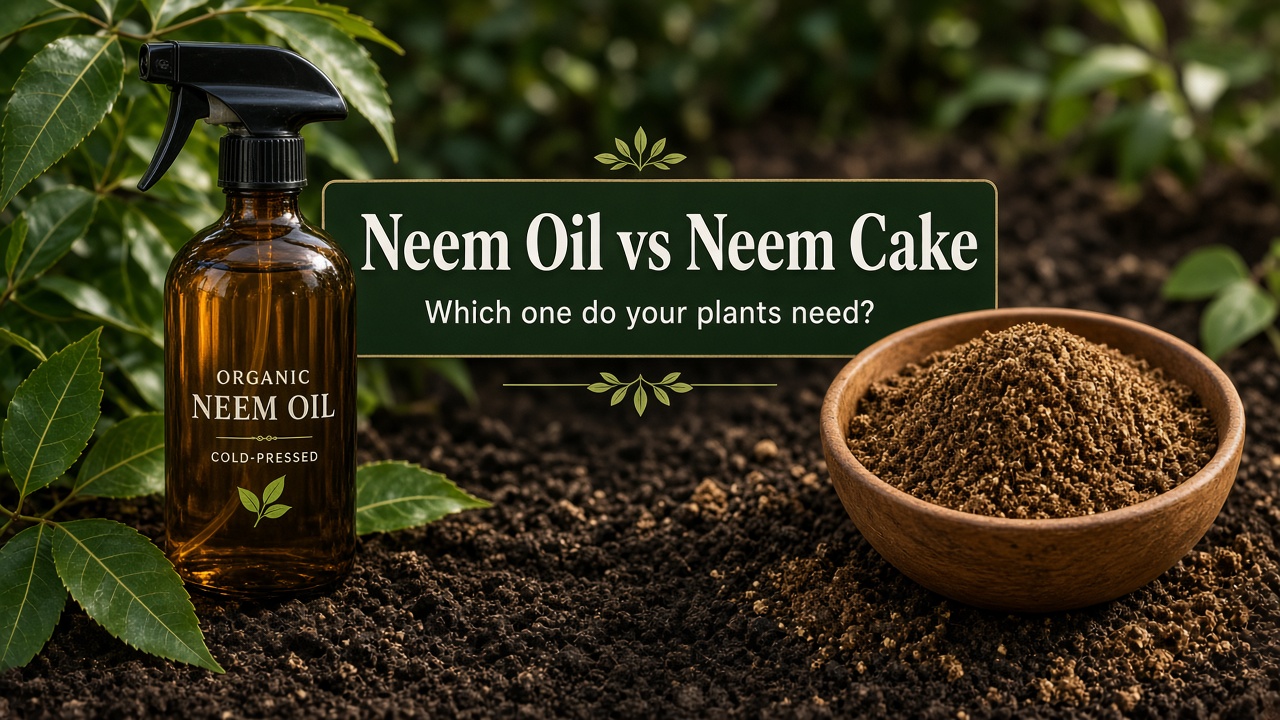
Neem oil is a liquid extract pressed from neem seeds, diluted with water and used as a foliar spray — applied directly onto leaves and stems to control pests that live and feed above the soil.
Neem cake is the solid residue left behind after oil is extracted from neem seeds. It’s worked into the soil, where it slowly releases nitrogen while deterring pests that live underground.
In short: neem oil treats what you can see on the plant, neem cake protects what’s happening below it.
Neem Oil for Plants: What It Actually Does
Neem oil for plants works primarily as a foliar treatment against soft-bodied, above-ground pests — aphids, mealybugs, whiteflies, spider mites, and scale insects. It disrupts these pests’ feeding and reproductive cycles, and also has mild antifungal properties that help with issues like powdery mildew.
How to use neem oil:
- Dilute according to the product label (typically a few millilitres per litre of water) with a small amount of mild soap as an emulsifier.
- Spray evenly across leaves, stems, and the undersides of leaves, where pests often hide.
- Apply in the early morning or evening to avoid leaf burn in direct sun.
- Repeat every 7–10 days during an active infestation, or every 2–3 weeks as routine prevention.
Neem Cake for Plants: What It Actually Does
Neem cake works underground rather than on the plant’s surface. Mixed into soil or potting mix, it slowly releases nitrogen as it breaks down, while its natural compounds repel soil-dwelling pests like nematodes, grubs, and root-feeding insects. It also improves overall soil health over time, similar to other organic amendments.
How to use neem cake:
- Mix into the soil at planting time, or work it into the topsoil around established plants.
- Water in lightly after application to help it begin breaking down.
- Reapply roughly once a month, or at the start of each growing season.
Neem Oil vs Neem Cake: Side-by-Side
| Neem Oil | Neem Cake | |
|---|---|---|
| Form | Liquid concentrate | Solid, granular |
| Applied to | Leaves and stems (foliar spray) | Soil |
| Targets | Above-ground pests (aphids, mealybugs, whiteflies) | Soil-dwelling pests (nematodes, grubs) |
| Secondary benefit | Mild antifungal properties | Slow-release nitrogen source |
| Application frequency | Every 7–10 days during infestation | Monthly or seasonally |
| Best used as | An active pest treatment | A preventive soil amendment |
When to Use Neem Oil vs Neem Cake
If you’re dealing with a visible pest problem on leaves or stems — curling leaves, sticky honeydew residue, or clusters of small insects — reach for neem oil first. It acts directly on the pests causing the damage.
If you’re setting up a new bed, repotting, or simply want to build long-term pest resistance from the soil up, neem cake is the better fit. It won’t do much against an active aphid outbreak on your leaves, but it steadily protects roots and improves soil health over the growing season.
Using Both Together
For the most complete organic pest protection, many gardeners use both: neem cake mixed into the soil as an ongoing preventive base, with neem oil sprays applied as needed whenever an above-ground pest problem appears. This combination covers both ends of the plant — roots and foliage — without relying on chemical pesticides.
For a deeper look at soil application, see Neem Cake Powder for Plants. For spray dilution and foliar use, see How to Use Neem Oil for Plants.
FAQs
Can I use neem oil and neem cake at the same time?
Yes. Neem cake works in the soil as a slow, preventive treatment, while neem oil targets active above-ground pests — using both together doesn’t cause any conflict and covers more ground than either alone.
Does neem oil kill pests instantly?
No. Neem oil works by disrupting feeding and reproduction rather than killing pests on contact, so noticeable improvement typically takes several applications over 1–2 weeks.
Is neem cake a fertilizer or a pesticide?
Both, to an extent. It provides a slow-release source of nitrogen while also deterring certain soil pests, making it a dual-purpose soil amendment rather than a dedicated pesticide.
Which is better for houseplants — neem oil or neem cake?
Both have a place: neem oil handles visible pests on leaves, while a small amount of neem cake mixed into the potting soil helps prevent root-level pest issues, particularly in containers reused across seasons.