30 Jul 2026 4 min read
Solving Soil Drainage Issues with Potting Mix and Perlite
Struggling with pots that stay soggy long after watering? Poor drainage is one of the most common — and most damaging — problems in container gardening. The good news is that it’s also one of the easiest to fix once you know what’s causing it.
Signs Your Plant Has a Drainage Problem
Look out for these warning signs:
- Water sits on top of the soil instead of soaking in within a few seconds
- Soil stays wet for days after watering, instead of drying out at the top within 1–2 days
- Yellowing leaves that droop even though the soil feels wet, not dry
- A sour or musty smell coming from the pot
- Roots look dark, mushy, or slimy when you check them
If you notice two or more of these, drainage is likely the problem — not lack of water or nutrients.
Why Drainage Problems Happen
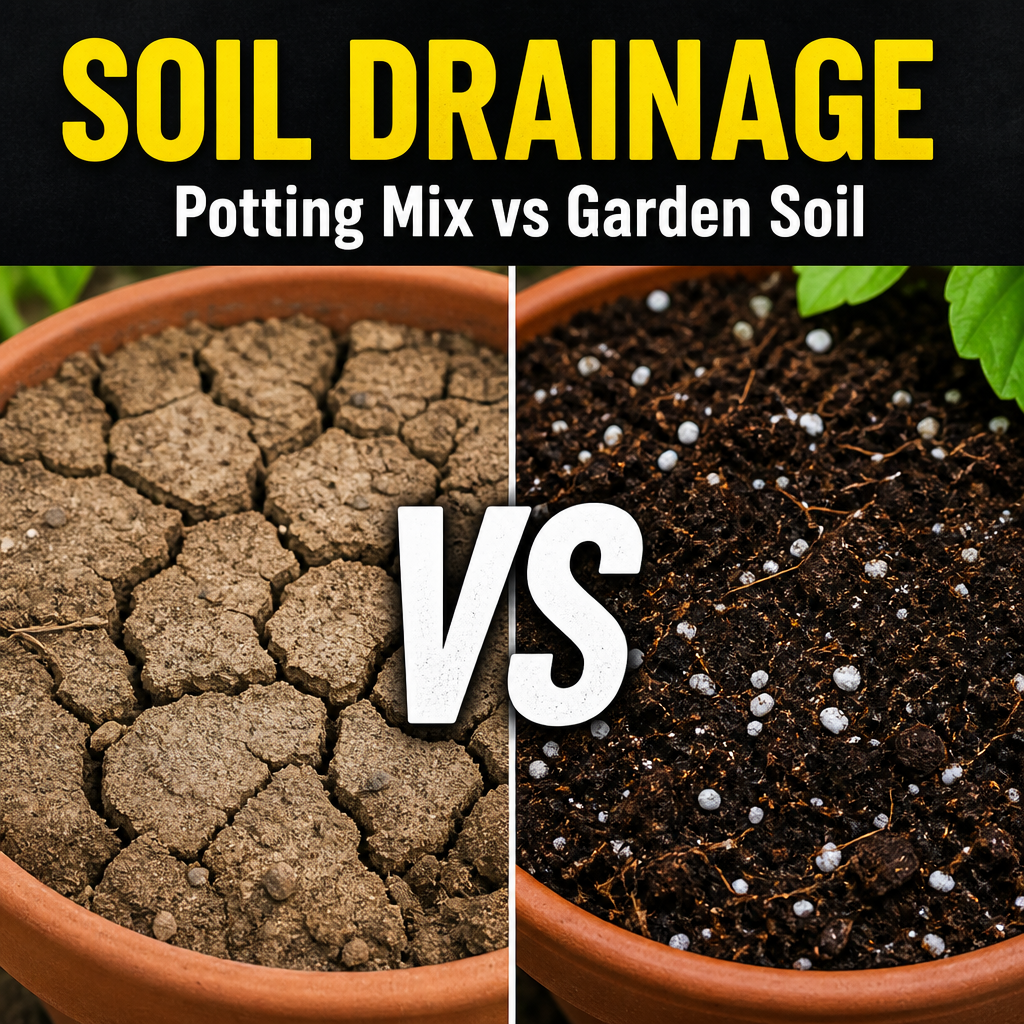
- Heavy, compacted soil — Regular garden soil is dense and holds too much water for pots.
- No aeration in the mix — Without a light, airy component, soil particles pack together and block water flow.
- Wrong pot or blocked drainage holes — Even the best mix won’t help if water has nowhere to escape.
- Overwatering a dense mix — Heavy soil combined with frequent watering is a common combination that leads to root rot.
Why Perlite Fixes This
Perlite is a lightweight, porous material that creates tiny air pockets throughout the soil. These pockets let excess water drain away quickly while still holding enough moisture for roots to use. It doesn’t break down over time, so the improvement lasts far longer than organic-only mixes.
Regular Potting Soil vs Potting Mix with Perlite
| Factor | Regular/Garden Soil | Potting Mix with Perlite |
|---|---|---|
| Drainage | Slow, water sits on top | Fast, excess water drains through |
| Root aeration | Low — soil compacts over time | High — perlite keeps air pockets open |
| Weight | Heavy | Lightweight, easy to move pots |
| Risk of root rot | Higher | Lower |
| Best for | Open ground, garden beds | Containers, pots, grow bags |
How to Fix a Waterlogged Pot
- Check the drainage hole — Make sure it isn’t blocked by compacted soil or roots.
- Repot into a perlite-based mix — Gently remove the plant, shake off the old, dense soil, and repot using a potting mix with added perlite.
- Adjust your watering — Water only when the top inch of soil feels dry, not on a fixed schedule.
- Avoid layering stones at the bottom — This is a common myth; it doesn’t improve drainage and can actually make it worse. The mix itself needs to be well-aerated throughout.
Frequently Asked Questions
How much perlite should I add to my potting mix?
For most container plants, a mix with roughly 10–20% perlite works well. Succulents and cacti benefit from a higher share, since they need faster drainage.
Can I add perlite to my existing potting soil?
Yes. Mix it in evenly rather than layering it, so drainage improves throughout the pot, not just at the bottom.
Does perlite affect how often I need to water?
Slightly — since water drains faster, you may need to water a little more often than with dense soil, but each watering will be more effective for the roots.
Is perlite safe for all plants?
Yes, it’s inert and safe for virtually all container plants, from vegetables to flowering plants to succulents.
Give Your Roots Room to Breathe
Good drainage isn’t just about avoiding soggy soil — it’s about giving roots the air and space they need to grow strong. A potting mix with the right amount of perlite solves both problems at once, so your plants stay healthy from the roots up.