14 Aug 2026 5 min read
How to Make a Terrace Garden: A Simple Guide for Beginners
A terrace garden looks easy from the outside. Just add some pots and plants, right? But most terrace gardens in India fail for the same few reasons — and all of them happen before you even buy a plant. Here is how to get the basics right first.
Step 1: Check Your Terrace First
This is the step most people skip. It is also the one that saves you the most trouble later.
- Check how much weight your roof can take. Wet soil is heavier than it looks. If you plan to keep many big pots, check this first — it is a safety issue, not just a gardening one.
- Check for waterproofing. Use a waterproof sheet or coating under your pots. This stops water from leaking into the ceiling below.
- See where the sun falls. Walk around your terrace at different times of day. Note which spots get direct sun and for how long. Most fruiting and flowering plants need 4 to 6 hours of direct sun. Leafy plants and herbs need less.
- Plan for drainage. Water should never sit on the terrace floor. Keep a slight slope towards the drain, and use pot stands so air can move under your pots.
Step 2: Pick the Right Pots
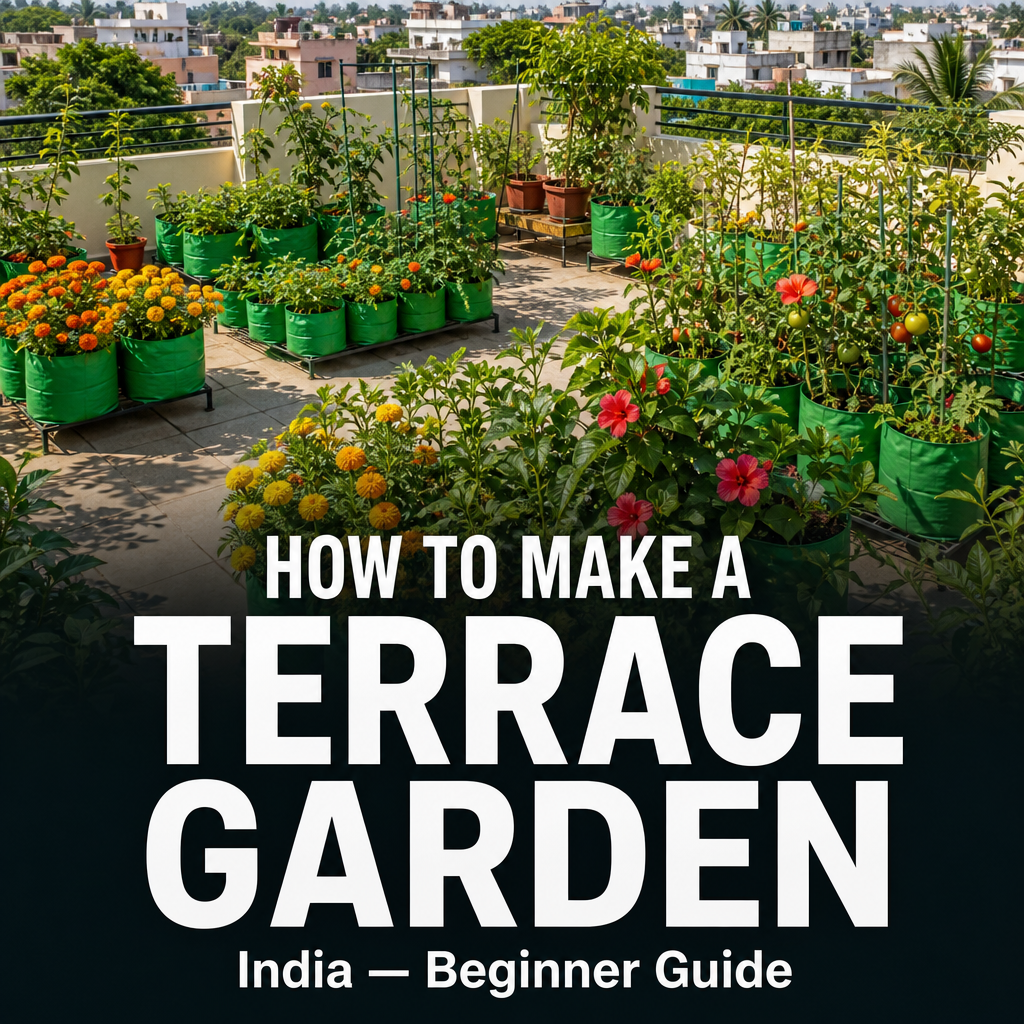
Avoid heavy pots made of cement or thick ceramic. They add extra weight your terrace does not need. Light grow bags or plastic pots are the usual choice for terrace gardens in India. They are also easier to move around while you plan your layout.
Match the pot size to the plant. Small herbs and leafy greens do fine in 8–10 inch pots. Tomatoes, chillies, and bigger flowering plants need 12 inch pots or larger grow bags.
Step 3: Use the Right Soil
This is the most important step. It is also where most beginners go wrong — usually by filling pots with plain soil dug from the ground.
Why this does not work: Garden soil is made for open ground, where water can drain away freely. Inside a pot, that same soil packs down tightly, holds too much water, and chokes the roots. It is also heavier than it needs to be — which matters when your terrace can only hold so much weight.
What works better: A light, well-draining mix made of three things —
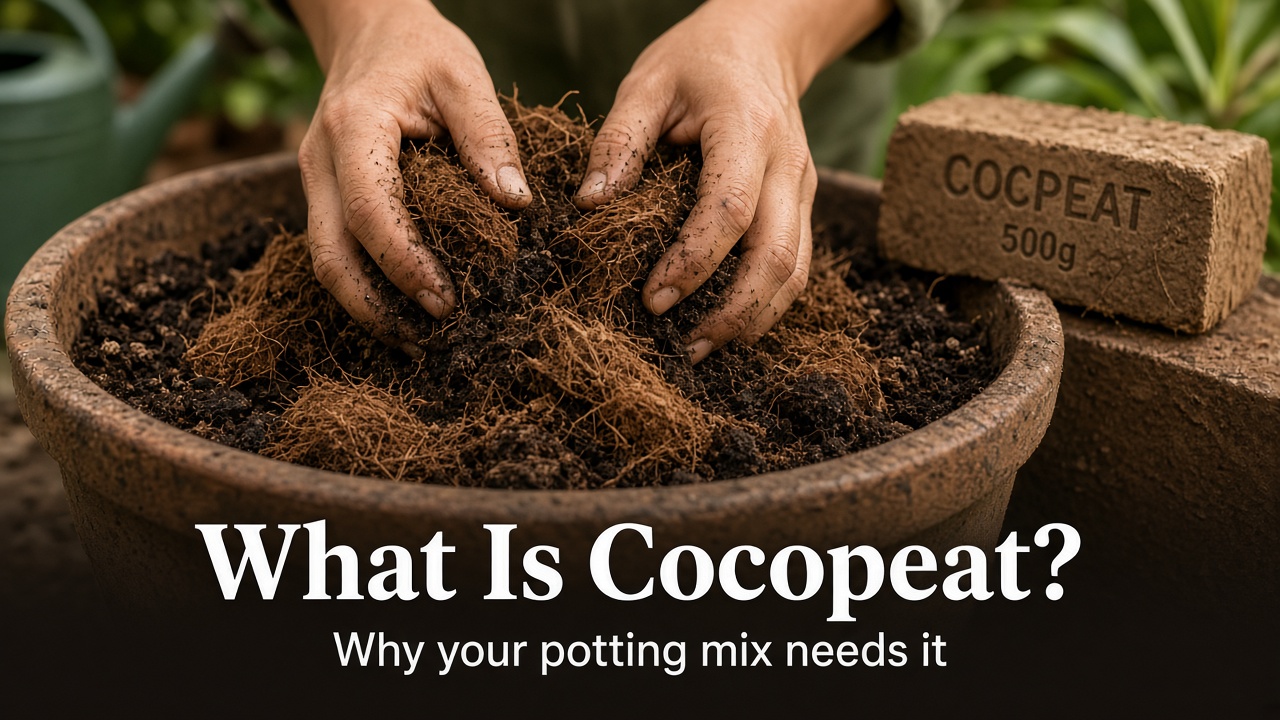
- A base that holds the mix together (cocopeat works better than garden soil here — it is light and holds moisture without packing down)
- Plant food (compost or vermicompost, which feeds the plant slowly over weeks)
- Something for drainage (perlite or coarse sand, so water does not sit and the mix stays loose)
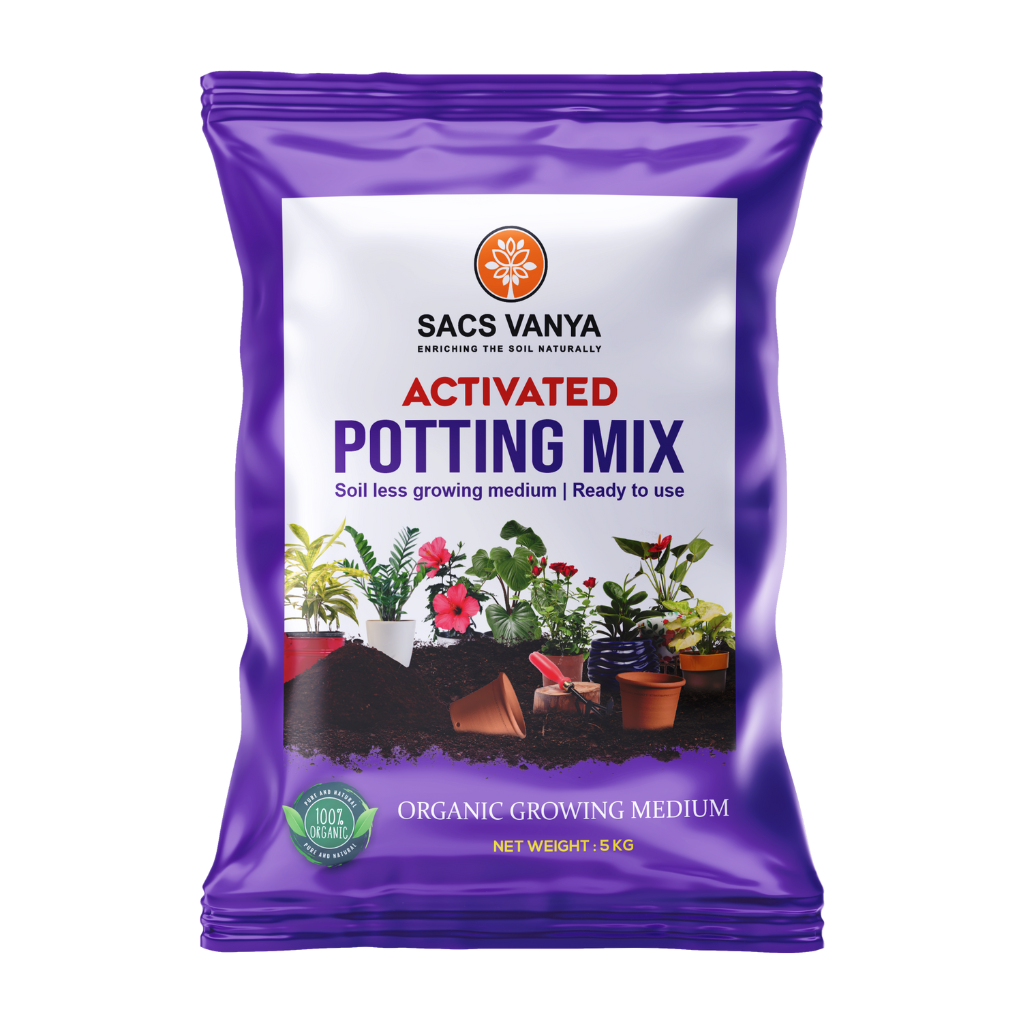
If you do not want to buy and mix three things yourself, a ready-to-use potting mix already has this balance built in. Just open the pack and plant — no measuring needed.
Step 4: Plant, Water, and Mulch
- Plant in the early morning or evening, not in the midday heat. Water well right after.
- Add a thin layer of dry leaves or coir on top of the soil. This keeps moisture in and means less watering, especially in hot Indian summers.
- Wait one to two weeks before adding any plant food. Let the roots settle in first.
Step 5: Build a Feeding Routine
Plants in pots need to be fed more often than plants in the ground, because pot soil runs out of nutrients faster.
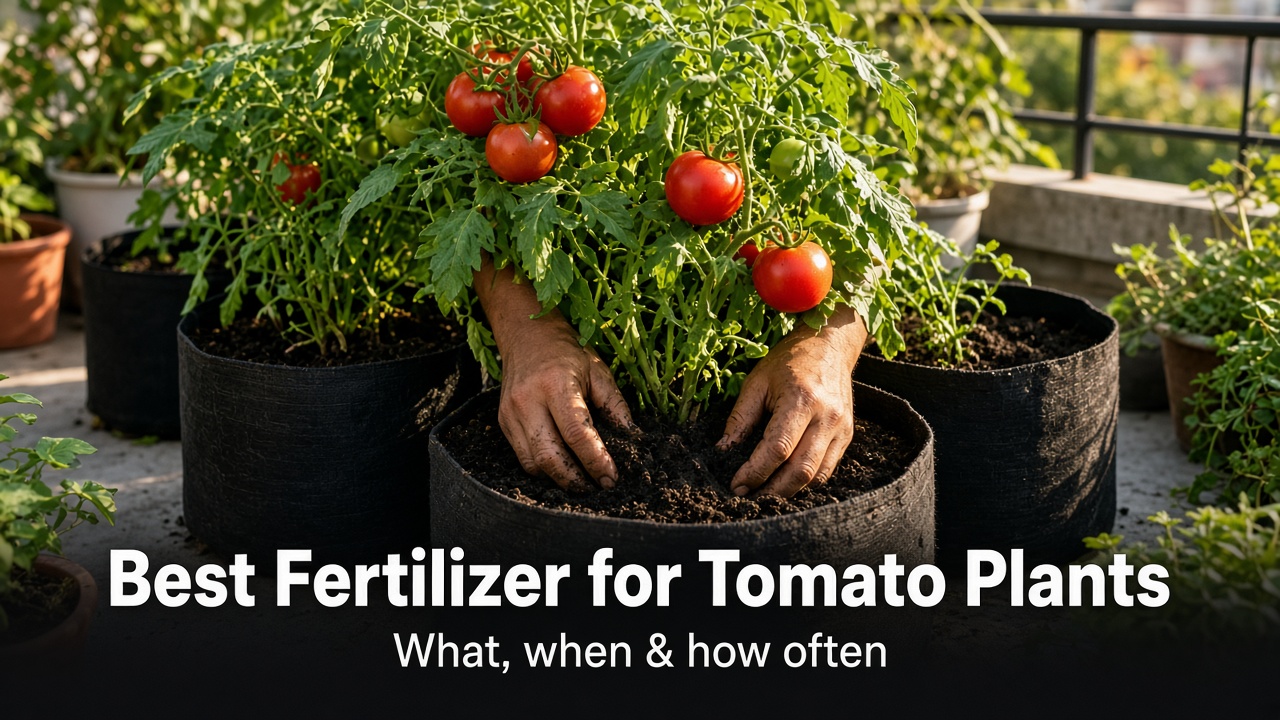
- Vermicompost, mixed into the soil or spread on top, works well every 3 to 4 weeks for most vegetables and flowering plants.
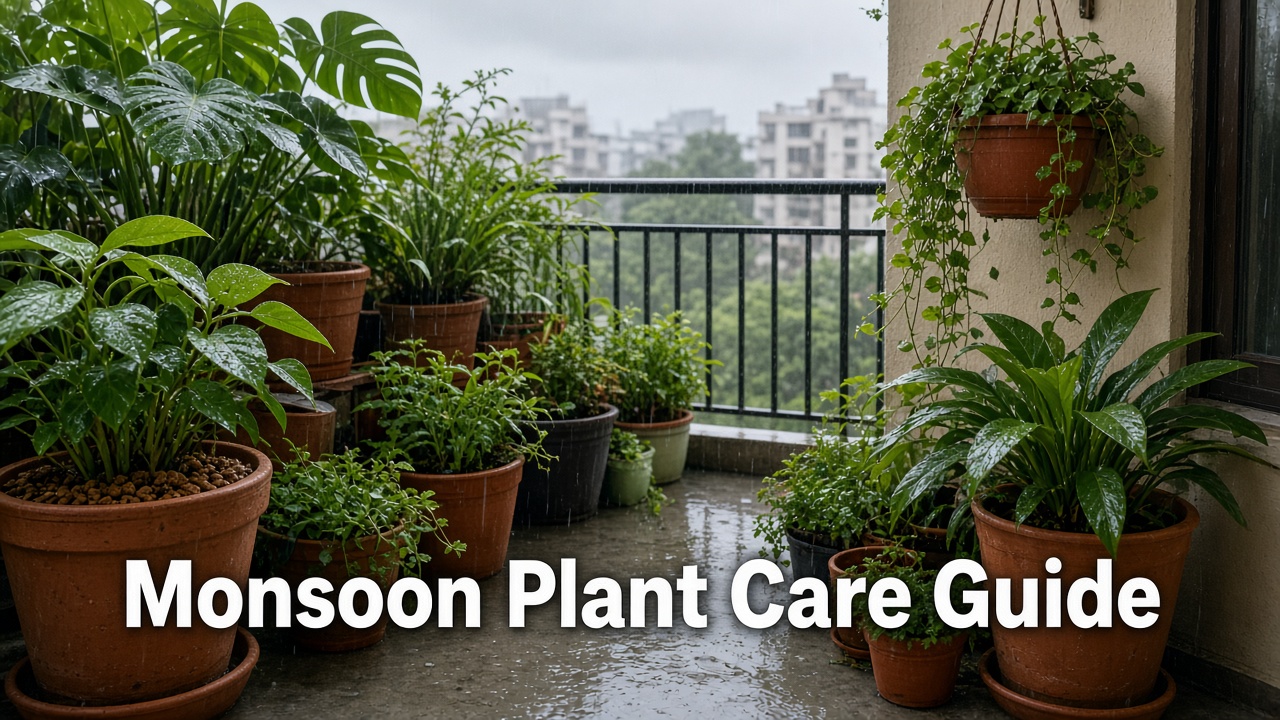
- During the monsoon, feed less. Heavy rain washes nutrients out of pots fast. Feeding too much during this time is wasted, and can even hurt the roots. Vermicompost releases its nutrients slowly, so it works better than chemical fertiliser during the rains.
- The right amount depends on your pot size and plant type. It is worth checking a proper dosage guide instead of guessing — too little or too much can both cause problems.
Step 6: Start Small
Most experienced terrace gardeners in India say the same thing: start with just 10 to 12 pots. Learn how to water, feed, and handle pests before you add more. Most terrace gardens are given up not because of too few plants, but because there were too many to manage from day one.
FAQ
Is a terrace garden safe for my roof?
Yes, as long as you check the weight your roof can hold, use light pots and soil, and make sure water does not sit on the surface.
What is the biggest mistake first-time terrace gardeners make?
Using plain garden soil instead of a light, well-draining potting mix. Garden soil packs down, holds too much water, and adds extra weight to the roof.
How much sunlight does a terrace garden need?
Most vegetables and flowering plants need 4 to 6 hours of direct sun each day. Leafy greens and shade-loving plants need less.
How often should I feed my terrace garden plants?
Vermicompost every 3 to 4 weeks works well for most vegetables and flowering plants. Feed less during the monsoon.