30 Jul 2026 4 min read
How to Fertilize Coconut Trees Naturally: A Simple Guide for Home Gardeners
Coconut trees are hardy, but they’re not maintenance-free. If your palm looks stunted, its fronds are yellowing, or it hasn’t fruited in years, the root cause is often nutritional — and knowing how to fertilize coconut trees correctly can make the difference between a struggling palm and a productive one.
Whether you’re growing a coconut tree in a home garden, farm plot, or terrace-adjacent yard, getting the fertilizing routine right doesn’t require complicated chemistry. It requires the right inputs, applied at the right time.
Why Coconut Trees Need Regular Fertilizing
Coconut palms are heavy feeders, particularly when it comes to potassium and nitrogen. In nutrient-poor or sandy soils — common in many coastal and semi-urban growing conditions — palms can quickly become deficient without supplemental feeding. Signs of nutrient stress include:
- Yellowing or browning frond tips
- Slow or stunted growth
- Reduced flowering and fruit set
- Weak, thin trunks in younger palms
Best Fertilizer for Coconut Trees: Going Organic
While synthetic NPK blends are commonly used in commercial coconut farming, many home gardeners are shifting toward organic alternatives for long-term soil health. The best fertilizer for coconut trees in a home garden setting typically combines:
- Vermicompost — a nutrient-dense, slow-release organic fertilizer that improves both nutrition and soil structure around the root zone
- Neem-based amendments — which support pest resistance in addition to feeding the soil
- Organic potash sources — important given coconut palms’ high potassium demand
Unlike synthetic fertilizers, organic inputs like vermicompost feed the surrounding soil ecosystem, encouraging beneficial microbial activity that supports the palm’s root system over time — not just a short nutrient spike.
A Simple Coconut Tree Fertilizer Schedule
For home gardeners, a practical coconut tree fertilizer schedule looks like this:
- At planting — Mix organic compost or vermicompost into the planting pit to establish healthy root development from the start.
- Young palms (1–3 years) — Apply vermicompost around the base every 2–3 months, keeping it a few inches away from the trunk itself.
- Mature palms (3+ years) — Fertilize 2–3 times a year, ideally at the start of the growing season and before flowering periods, using a combination of vermicompost and organic potassium sources.
- Ongoing care — Water thoroughly after each application to help nutrients reach the root zone.
Application Tips for Organic Fertilizer for Coconut Trees
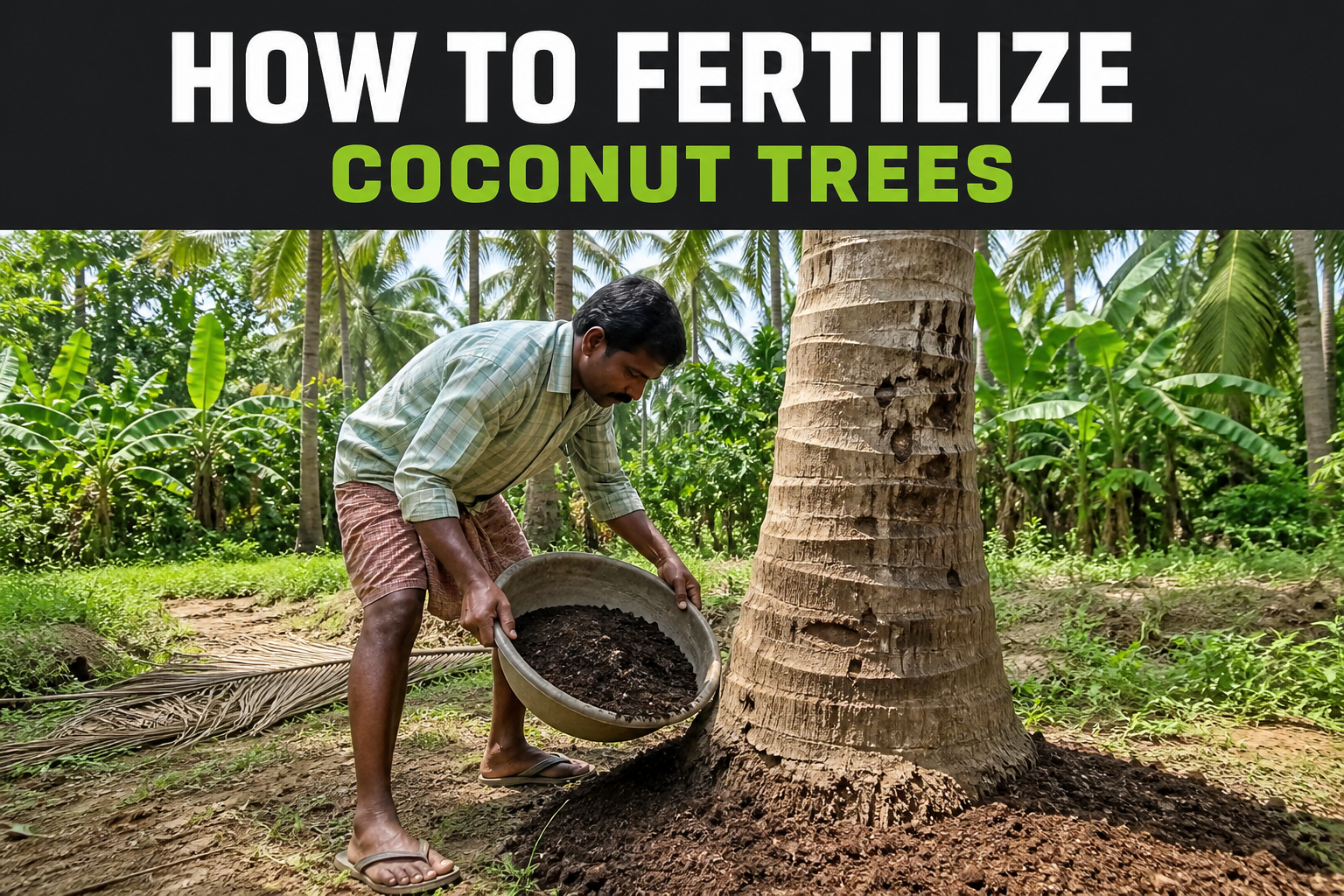
- Apply fertilizer in a ring around the base of the tree, roughly at the drip line of the fronds, rather than directly against the trunk.
- Loosen the topsoil slightly before applying to help nutrients penetrate rather than sit on the surface.
- Water immediately after fertilizing to activate microbial breakdown.
- Avoid over-fertilizing — more isn’t always better, and excess nitrogen can encourage leafy growth at the expense of fruiting.
General Coconut Plant Care Beyond Fertilizing
Fertilizing is only one part of healthy coconut plant care. Good drainage, consistent watering (especially during dry spells), and periodic pest checks all contribute to a palm’s overall vigor. Coconut trees planted in compacted or poor-draining soil often show fertilizer deficiency symptoms even when fed correctly — so soil quality should always be addressed alongside nutrition.
FAQs
How often should I fertilize a coconut tree?
Young palms benefit from feeding every 2–3 months, while mature palms typically need fertilizing 2–3 times a year.
Can vermicompost alone fertilize a coconut tree?
Vermicompost is an excellent base fertilizer, but mature, fruit-bearing palms often benefit from supplemental organic potassium sources given their high potassium demand.
What are signs a coconut tree needs fertilizer?
Yellowing fronds, slow growth, thin trunks in young palms, and reduced flowering or fruiting are common signs of nutrient deficiency.