27 Apr 2026 3 min read
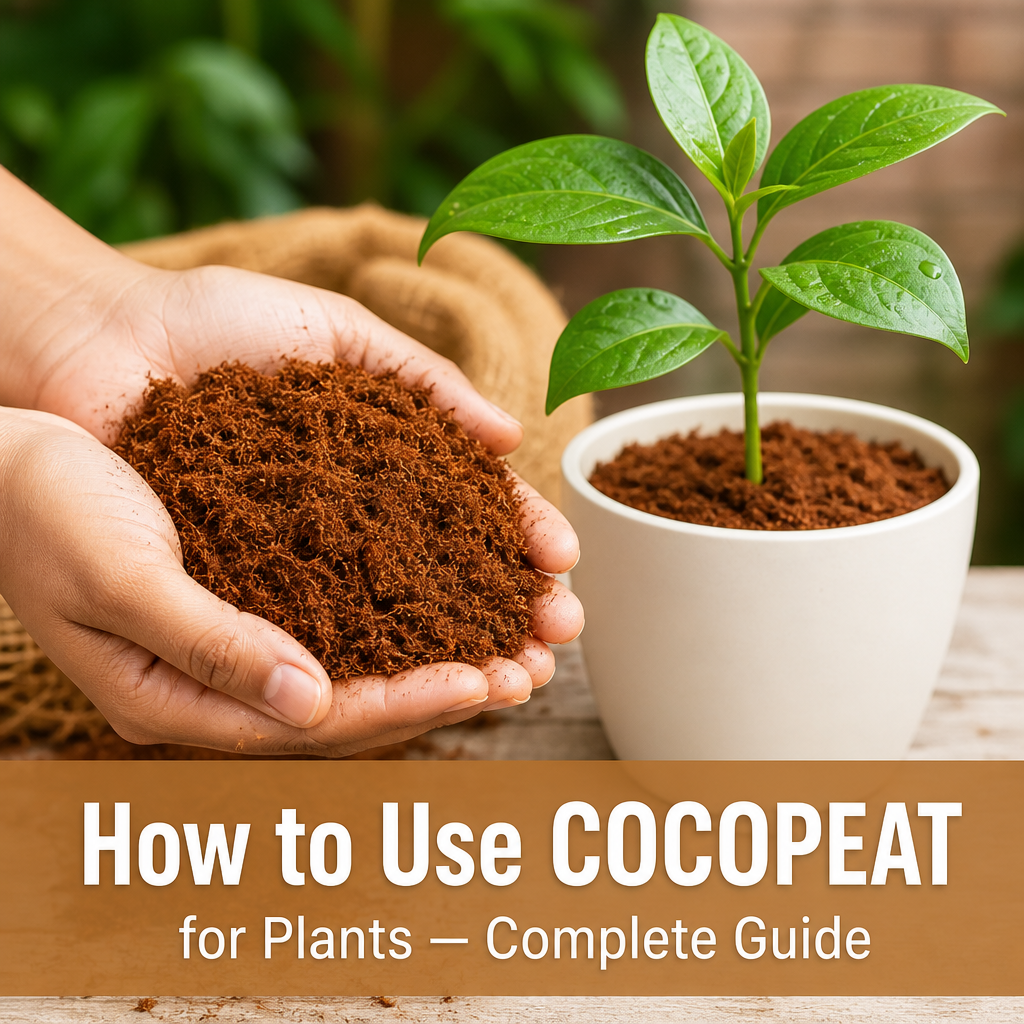
How to Use Cocopeat for Plants: A Complete Guide
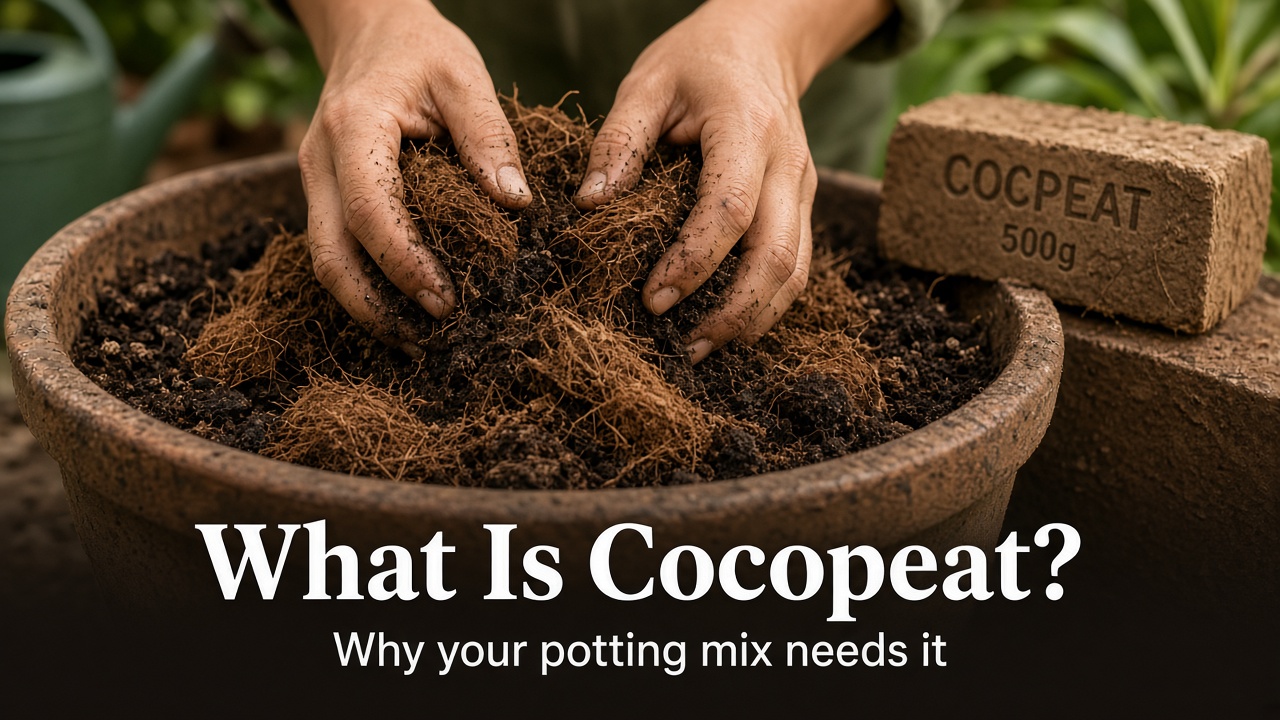
Cocopeat, also called coir pith or coco coir, is one of the most useful growing mediums for home gardeners. It is made from coconut husk and is lightweight, reusable, and eco-friendly.
Whether you grow vegetables in a balcony setup or maintain a terrace garden, cocopeat helps improve moisture retention and root health when used correctly.
What is cocopeat?
Cocopeat is the fine, spongy material left after coir fibers are removed from coconut husk. It usually comes in compressed blocks or loose form.
It has a slightly acidic pH (around 5.5-6.8) and can hold water several times its own weight. However, it is not a fertilizer, so it must be combined with compost, vermicompost, or other nutrient sources.
Benefits of cocopeat for plants
- Retains moisture for longer and reduces watering frequency
- Improves aeration and drainage around roots
- Helps prevent soil compaction in pots
- Lightweight and ideal for grow bags and balcony containers
- Reusable for multiple growing cycles
- Biodegradable and sustainable
How to hydrate a cocopeat block
- Place the compressed block in a large bucket or tub.
- Add water gradually (warm water works faster).
- Let it soak for 20-30 minutes.
- Break clumps by hand and fluff the material.
- Use immediately or store in a covered container.
How to use cocopeat: 5 practical methods
1) In potting mix
Use cocopeat with compost and soil for a balanced medium that drains well while holding enough moisture.
2) For seed germination
Its soft and sterile texture supports healthy sprouting. Once seedlings have true leaves, transplant to nutrient-rich mix.
3) As mulch
Apply a 2-3 inch layer around plants to reduce evaporation and suppress weeds.
4) In hydroponics
Cocopeat works as a soilless medium with strong water and nutrient retention.
5) As a soil amendment
Mix into heavy soil to make it lighter and improve root-zone airflow.
Best cocopeat mixing ratio for potting mix
For most home-garden plants, use:
- 50% cocopeat
- 30% compost or vermicompost
- 20% garden soil
For extra drainage, add a small quantity of perlite or coarse river sand.
Plants that grow well with cocopeat
Common options include:
- Vegetables: tomato, spinach, cucumber, chilli, beans
- Herbs: mint, tulsi, coriander, basil
- Flowering and indoor plants: marigold, petunia, money plant, peace lily
Common mistakes to avoid
- Using dry cocopeat directly without hydrating
- Using cocopeat alone for mature plants
- Overwatering despite high moisture retention
- Ignoring nutrient supplementation
- Buying poor-quality high-salt cocopeat
Final thoughts
Cocopeat is a strong base for container gardening when paired with organic nutrition. If you want healthy roots, better moisture control, and lighter potting media, cocopeat is a reliable choice.
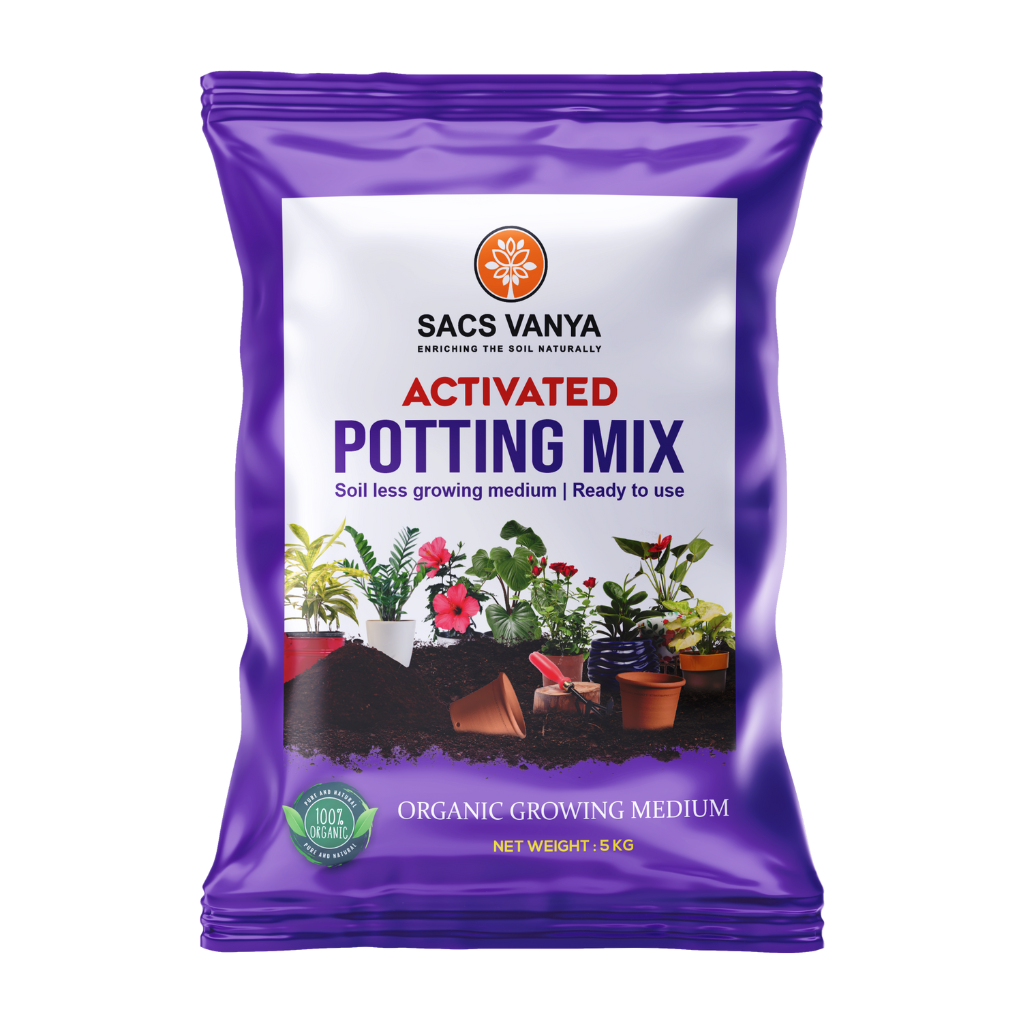
For a ready-to-use option, check the SACS Vanya Organic Activated Potting Mix.
FAQs
Can cocopeat replace soil completely?
It can be used as a primary medium in some setups, but nutrients must be added through compost or fertilizers.
How often should I water plants in cocopeat mix?
Water when the top layer feels dry. Frequency is usually lower than plain soil.
Can I reuse cocopeat?
Yes. Clean it, remove roots, dry in shade, and store for reuse.